Ribbing for Hat Brims: 1×1, 2×2 and Twisted Rib Compared
How 1x1, 2x2 and twisted rib differ on a hat brim, which needle size to use, how deep to knit the band and how to fix a brim that flares.
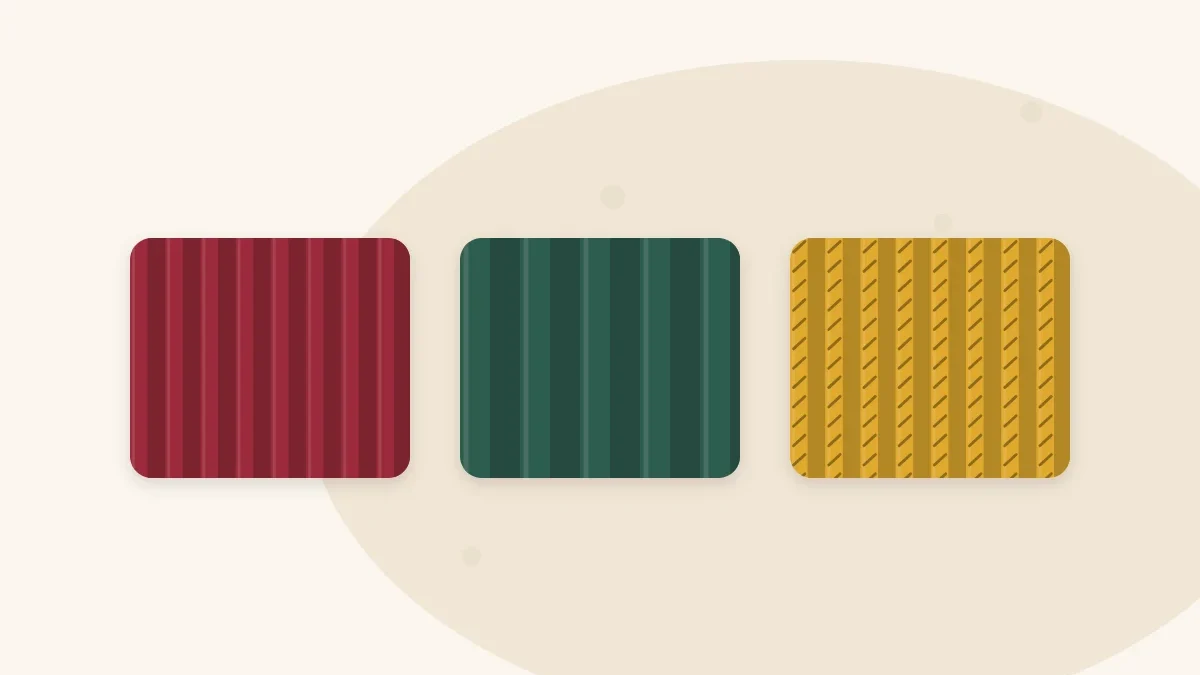
Ribbing for hat brims does two jobs: it stretches to go over the head and then pulls back in to hold the hat in place, and it stops a stockinette hat from curling up at the edge. The three ribs used most often are 1×1, 2×2 and twisted rib. They are all made from knit and purl stitches, but they differ in look, grip and the stitch counts they need.
The three ribs side by side
| 1×1 rib | 2×2 rib | Twisted rib | |
|---|---|---|---|
| Worked in the round as | (K1, p1) to end | (K2, p2) to end | (Knit 1 through the back loop, p1) to end |
| Stitch count | Multiple of 2 | Multiple of 4 | Multiple of 2 |
| Look | Fine, close columns | Bold, clearly grooved columns | Sharp, raised, slightly corded columns |
| Stretch | Good | Very good | Moderate; firmer than plain rib |
| Speed | Slowest; yarn moves after every stitch | Faster; yarn moves every two stitches | Similar to 1×1 |
| Suits | Fine yarns, neat narrow brims, watch caps | Worsted and bulky yarns, casual beanies | Smooth yarns where a crisp edge is wanted |
1×1 rib
Knit 1, purl 1 makes the finest-looking band. When relaxed, the knit columns close up so tightly that the purls nearly disappear, and the brim can look almost like stockinette until it is stretched. It is a tidy, understated edge that works with any even stitch count. Some knitters find their 1×1 rib a little loose or uneven, because switching between knit and purl on every stitch feeds extra yarn into the fabric; a smaller needle solves most of that. A full hat in this stitch is the 1×1 ribbed watch cap.
2×2 rib
Knit 2, purl 2 produces deeper grooves and a stronger pull inward. It is generally the stretchiest of the three and the easiest to read: the pairs of columns are obvious after two or three rounds, so mistakes show up quickly. The one condition is the stitch count, which has to divide by 4. The 2×2 ribbed beanie uses it for the entire hat.
Twisted rib
Twisted rib is 1×1 rib with one change: each knit stitch is worked through the back loop. Instead of inserting the right needle into the front of the stitch from left to right, insert it into the back leg from right to left, then wrap and pull through as usual. That crosses the base of the stitch, tightening it so the knit column stands up in a crisp line.
In the round, working the knit stitches through the back loop on every round and purling normally gives the standard version. The fabric is firmer and a bit less stretchy than plain 1×1 rib, so it holds its shape well but has less give for a snug fit. It shows best in smooth, light-colored yarn and gets lost in fuzzy or very dark yarn.
Use a smaller needle for the brim
Most hat patterns work the brim on a needle one or two sizes smaller than the body. Ribbing knitted on the body needle tends to be loose and can flare outward instead of hugging the head. A smaller needle makes denser, springier fabric that recovers after stretching.
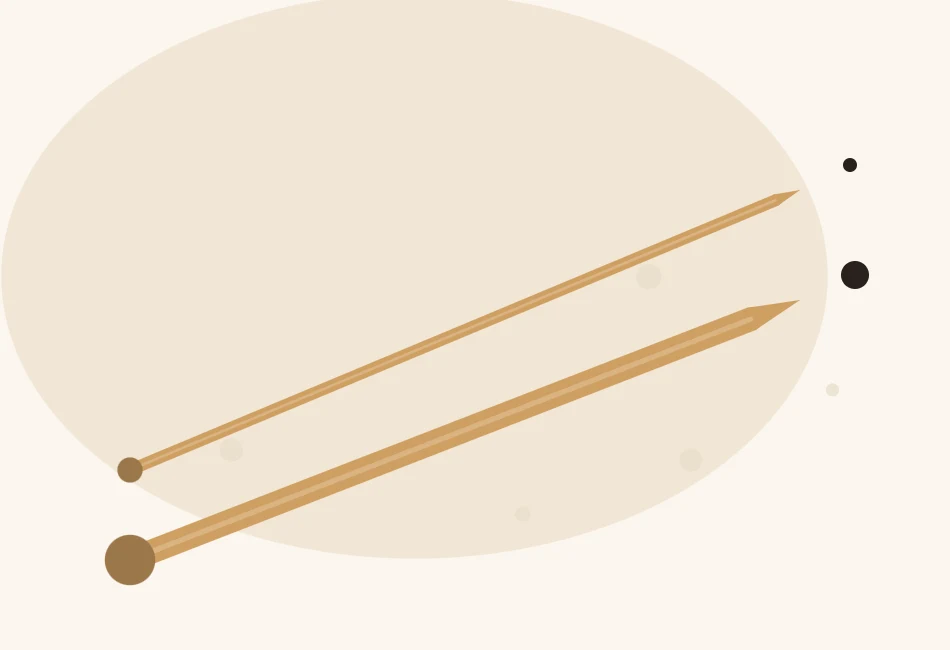
A common pairing for worsted weight (4) yarn is a US 6 (4 mm) needle for the brim and a US 8 (5 mm) needle for the body, two sizes apart. With bulkier yarn the same idea applies. The Craft Yarn Council’s chart of needle sizes shows US and metric sizes in order, which helps when working out what “two sizes down” is.
Tip
The cast-on has to stretch as far as the ribbing does. If the edge feels tight, cast on over the larger body needle, or over two needles held together, then work the ribbing on the smaller needle.
How deep to make the brim
- Plain, unfolded brim: about 1 to 2 in (2.5 to 5 cm) on an adult hat. Less than 1 in often is not enough to stop stockinette from rolling.
- Baby and toddler hats: about 0.75 to 1.25 in (2 to 3 cm).
- Folded cuff: ribbing twice as deep as the finished cuff, because it is worn doubled. A 2.5 in (6.5 cm) cuff needs about 5 in (12.5 cm) of ribbing.
A folded cuff also needs the hat to be longer overall. The classic knit beanie with a folded brim shows how the extra length is added. Ribbing is only one way to finish an edge; rolled and garter edges are compared in the guide to hat brim styles.
Getting the stitch count right
The rib repeat has to fit into the cast-on a whole number of times, or the pattern will not meet itself at the end of the round. Check the count before casting on:
- 88 sts works for 1×1 rib (88 ÷ 2 = 44 repeats) and for 2×2 rib (88 ÷ 4 = 22 repeats).
- 90 sts works for 1×1 rib (45 repeats) but not for 2×2 rib, since 90 ÷ 4 leaves 2 sts over. Use 88 or 92 instead.
At a gauge of 4.5 stitches per inch, changing from 90 to 88 sts alters the hat by less than half an inch, well within what ribbing absorbs. The full calculation from head size to cast-on is explained in how many stitches to cast on for a hat.
If the brim goes wrong
The brim flares out or feels loose
The ribbing is too relaxed for the yarn. Reknit it on a needle one size smaller, or two sizes below the body needle. Yarn with little elasticity, such as cotton, also makes looser ribs than wool, so cotton brims benefit most from a smaller needle.
The edge is tight but the ribbing is fine
The cast-on is the culprit. Start again with a stretchier cast-on worked loosely or over a larger needle.
One knit column looks wider than the others
In 2×2 rib, the knit stitch just before a purl often comes out loose, because the yarn travels a little farther when it moves to the front. Give the yarn a gentle tug after working the first purl stitch of each pair. The difference usually evens out further after washing.
The columns shift sideways partway up
A stitch was knitted where it should have been purled, or the reverse, and every stitch after it followed the mistake. Read the stitches below the needle: knit the ones that show a “V” and purl the ones that show a bump.
Watch out
Do not block ribbing by stretching it wide and pinning it. Wet ribbing that dries stretched stays stretched, and the brim loses its grip.
Frequently asked questions
Is 1x1 or 2x2 ribbing better for a hat brim?
Both work. 2x2 rib is generally stretchier and easier to read, and it suits thicker yarns. 1x1 rib looks finer and works with any even stitch count. The choice is mostly about appearance and the stitch count of the hat.
What needle size should be used for hat ribbing?
Usually one or two sizes smaller than the needle used for the body. For example, a US 6 (4 mm) brim with a US 8 (5 mm) body in worsted-weight yarn.
How many rounds of ribbing does a hat brim need?
Measure by depth rather than rounds: about 1 to 2 inches for a plain adult brim, or twice the finished cuff depth for a folded cuff.
What is twisted rib?
It is 1x1 rib in which every knit stitch is worked through the back loop. The twisted knit columns are tighter and more sharply defined, and the fabric is slightly less stretchy than plain rib.