How Many Stitches to Cast On for a Hat: The Simple Math
The cast-on number for any hat comes from head circumference, negative ease and your own gauge. This guide shows the formula, the rounding rules and worked examples in four yarn weights.
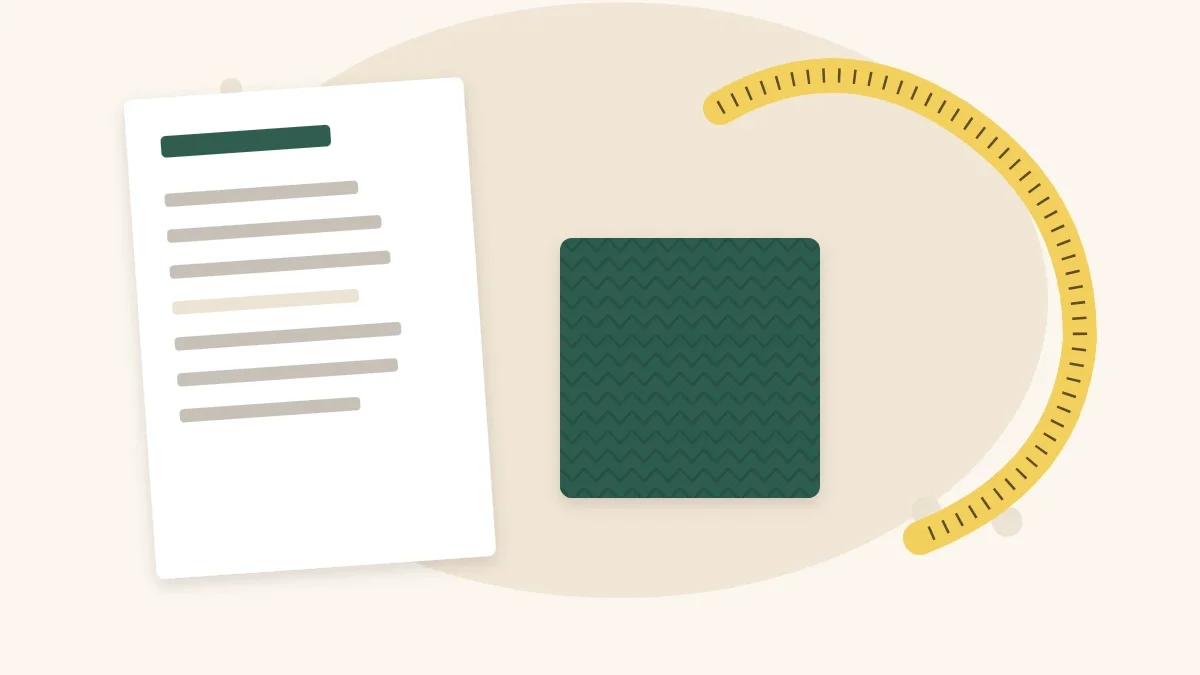
The number of stitches to cast on for a hat comes from one short calculation: the circumference you want the hat to be, multiplied by the number of stitches in one inch of your knitting. For an average adult hat in worsted weight (4) yarn the answer is often 88 stitches, but that figure is only right for one gauge and one head. The method below works for any yarn, any needle and any size.
The formula
(Head circumference − negative ease) × stitches per inch = cast-on stitches, rounded to a number that suits the stitch pattern.
It needs three inputs, taken in order.
1. Head circumference
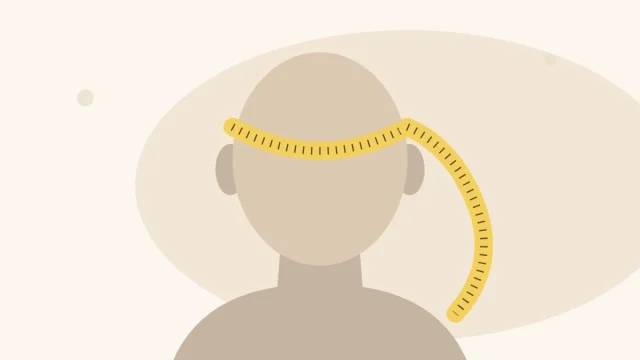
Measure around the head where the band of the hat will sit: across the forehead, above the ears and around the widest part of the back of the head. If the wearer is not available, use a typical range from the knit hat size chart or from the Craft Yarn Council head circumference chart.
2. Negative ease
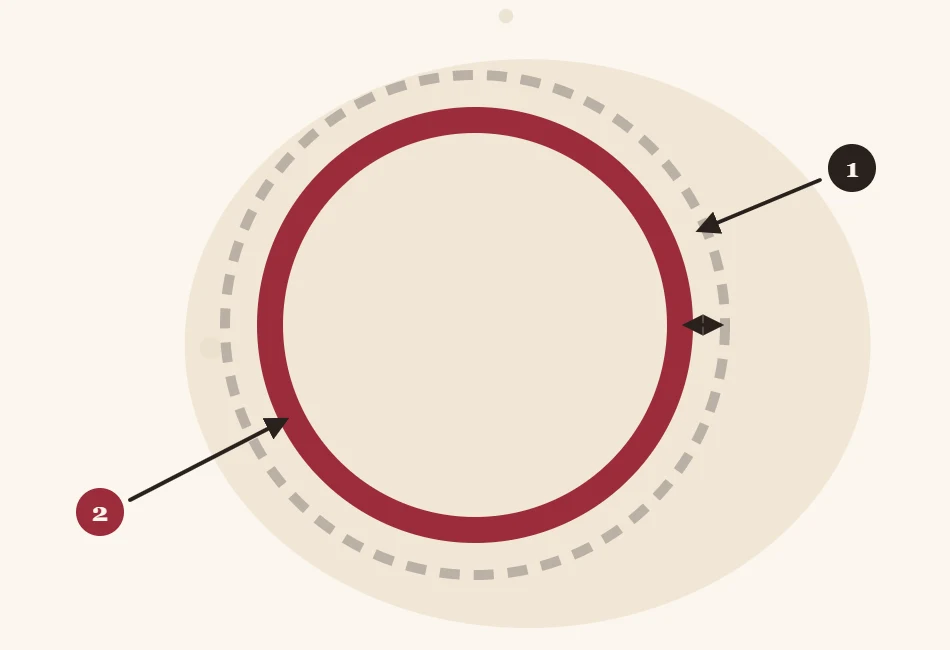
A hat has to be smaller than the head so that it stretches slightly and stays on. Subtract about 1.5 to 3 in (4 to 7.5 cm), which is roughly 5 to 15% of the head measurement. Around 2 to 2.25 in (5 to 5.5 cm) is a comfortable middle for an adult stockinette hat with a ribbed brim.
3. Stitches per inch
This is your gauge, and it has to come from your own hands. Knit a gauge swatch for the hat, count the stitches across 4 in (10 cm) and divide by 4. Eighteen stitches in 4 in is 4.5 stitches per inch.
A worked example
The wearer’s head measures 22 in (56 cm). The yarn is worsted weight (4) and the swatch shows 4.5 stitches per inch on US 8 (5 mm) needles.
- Subtract the ease. 22 − 2.25 = 19.75 in. That is the target hat circumference.
- Multiply by the gauge. 19.75 × 4.5 = 88.9 stitches.
- Round. The brim is k2, p2 ribbing, which needs a multiple of 4, and the crown has 8 decrease sections, which needs a multiple of 8. The nearest multiple of 8 is 88.
- Check. 88 ÷ 4.5 = about 19.5 in (49.5 cm). That leaves about 2.5 in (6.5 cm) of negative ease, inside the comfortable range.
Cast on 88 stitches. Step 4 is the one most often skipped, and it is the one that catches mistakes: always divide the rounded number back by the gauge and look at the finished size before casting on.
Rounding rules
The raw answer is almost never a usable number. Round it to fit every repeat in the hat.
| Feature of the hat | Cast-on must be a multiple of |
|---|---|
| K1, p1 ribbing (1×1) | 2 |
| K2, p2 ribbing (2×2) | 4 |
| Crown with 6 decrease sections | 6 |
| Crown with 8 decrease sections | 8 |
| A colorwork or texture chart | The number of stitches in one chart repeat |
When a hat has two requirements, the number must satisfy both. A 2×2 ribbed brim with an 8-section crown needs a multiple of 8, because every multiple of 8 is also a multiple of 4. A 2×2 ribbed brim with a 6-section crown needs a multiple of 12, such as 48, 60 or 72. The guide to crown decreases explains how the sections are set up.
Round to the nearest valid number, then let the fabric break a tie: round down for stretchy all-over ribbing, and round up for fabrics with less give, such as colorwork or cotton.
Tip
If the nearest valid number is too far from the target, change the crown instead of the size. A hat that needs 84 stitches works with 6 or 7 decrease sections (84 is a multiple of both) even though it is not a multiple of 8.
The same head in four yarn weights
Here is the 22 in (56 cm) head again, with the same 19.75 in target, at four common gauges. The yarn weight names follow the standard yarn weight system.
| Yarn weight | Gauge | 19.75 in × gauge | Cast on | Hat measures |
|---|---|---|---|---|
| DK (3) | 5.5 sts per inch | 108.6 | 112 | About 20.25 in (51.5 cm) |
| Worsted (4) | 4.5 sts per inch | 88.9 | 88 | About 19.5 in (49.5 cm) |
| Bulky (5) | 3.5 sts per inch | 69.1 | 72 | About 20.5 in (52 cm) |
| Super bulky (6) | 2.5 sts per inch | 49.4 | 48 | About 19.25 in (49 cm) |
The first three rows use a multiple of 8 for an 8-section crown; the super bulky row uses a multiple of 6 for a 6-section crown, since thick yarn has too few stitches for eight neat wedges.
Notice the bulky row. The two multiples of 8 on either side of 69.1 are 64 and 72. Sixty-four stitches would measure about 18.25 in (46.5 cm), a snug 3.75 in smaller than the head; 72 stitches measure about 20.5 in, which is 1.5 in smaller. For a 22 in head in stockinette, 72 is the better fit. With thick yarn each stitch is worth more than a quarter of an inch, so the check in step 4 matters even more.
Special cases
Hats ribbed from brim to crown
Ribbing pulls in strongly, so measure a ribbed swatch slightly stretched, the way it will sit on the head, rather than fully relaxed. Use that gauge in the formula and stay at the generous end of the ease range. The 2×2 ribbed beanie shows the numbers for a full pattern.
Hats knit flat and seamed
Work out the count exactly as above, then add 2 stitches: one at each edge to be taken up by the seam. A hat calculated at 88 stitches is cast on with 90 when it is knit flat on straight needles. For a complete seamed pattern, see the easy flat-knit hat.
Children’s hats
The method does not change, only the inputs. For a 20 in (51 cm) head with 2 in of ease, the target is 18 in. At 4.5 stitches per inch that is 81 stitches, rounded to 80. Checking back, 80 ÷ 4.5 is about 17.75 in (45 cm).
Watch out
Never borrow a stitch count from a different yarn weight. Eighty-eight stitches in bulky yarn at 3.5 stitches per inch would measure about 25 in (63.5 cm), larger than nearly any adult head.
Quick checklist before casting on
- Head measured, or a typical size chosen from a chart.
- Ease subtracted: 1.5 to 3 in (4 to 7.5 cm).
- Gauge taken from a washed swatch in the body stitch pattern.
- Result rounded to fit the ribbing and the crown sections.
- Rounded number divided back by the gauge to confirm the finished circumference.
Frequently asked questions
How many stitches do I cast on for an adult hat in worsted weight yarn?
At a gauge of 4.5 stitches per inch, 88 stitches gives a hat of about 19.5 in (49.5 cm), which suits many adult heads of 21 to 22.5 in. At any other gauge the number changes, so measure your own swatch first.
Should I round the cast-on number up or down?
Round to the nearest number that fits your ribbing and crown repeats, then divide it back by your gauge to check the size. Round down for stretchy ribbed fabric and up for less elastic fabric such as colorwork or cotton.
Why does the cast-on have to be a multiple of 8?
It only has to be when the crown is shaped in 8 equal sections. Each section needs the same number of stitches, so the total must divide evenly by the number of sections. A 6-section crown needs a multiple of 6.
Do I need extra stitches for a hat knit flat?
Yes. Add 2 stitches to the calculated number, one at each edge, because the seam takes up one stitch on each side when the hat is sewn.