Knit Hat Size Chart: Head Circumference, Hat Height and Ease
A size chart for knitted hats from baby to adult large, with typical head circumferences, matching hat circumferences and heights, and a plain explanation of negative ease.
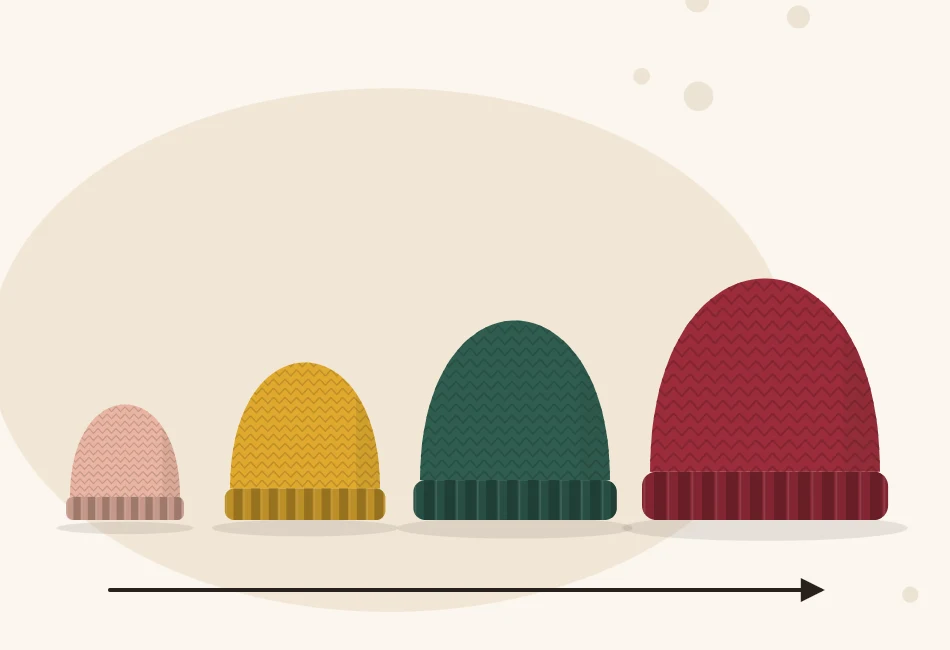
A knitted hat fits when two measurements are right: the circumference around the band and the height from brim to crown. The chart below gives typical head sizes with a matching hat circumference and height for each. Treat every figure as a starting point; heads vary a great deal within any age group, so a real measurement always beats a chart.
Knit hat size chart
Hat circumference in this chart is about 10% smaller than the head, which is a comfortable amount of negative ease for a stretchy ribbed or stockinette hat. Hat height is for a fitted hat measured from the cast-on edge to the top of the crown, without a folded cuff.
| Size | Typical head circumference | Hat circumference | Hat height (fitted) |
|---|---|---|---|
| Baby, 6 to 12 months | 16 to 18 in (41 to 46 cm) | 14.5 to 16.25 in (37 to 41 cm) | About 6 to 6.5 in (15 to 16.5 cm) |
| Toddler | 18 to 19 in (46 to 48 cm) | 16.25 to 17 in (41 to 43 cm) | About 7 in (18 cm) |
| Child | 19 to 20.5 in (48 to 52 cm) | 17 to 18.5 in (43 to 47 cm) | About 7.5 in (19 cm) |
| Teen / adult small | 20.5 to 22 in (52 to 56 cm) | 18.5 to 19.75 in (47 to 50 cm) | About 8 in (20.5 cm) |
| Adult medium | 22 to 23 in (56 to 58.5 cm) | 19.75 to 20.75 in (50 to 53 cm) | About 8.5 in (21.5 cm) |
| Adult large | 23 to 24 in (58.5 to 61 cm) | 20.75 to 21.5 in (53 to 54.5 cm) | About 9 in (23 cm) |
These are typical ranges, not rules. For a second reference by age group, the Craft Yarn Council head circumference chart lists standard measurements used across the yarn industry.
How to measure a head
- Use a soft tape measure. If none is at hand, wrap a strand of non-stretchy yarn around the head, pinch the meeting point and lay the strand against a ruler.
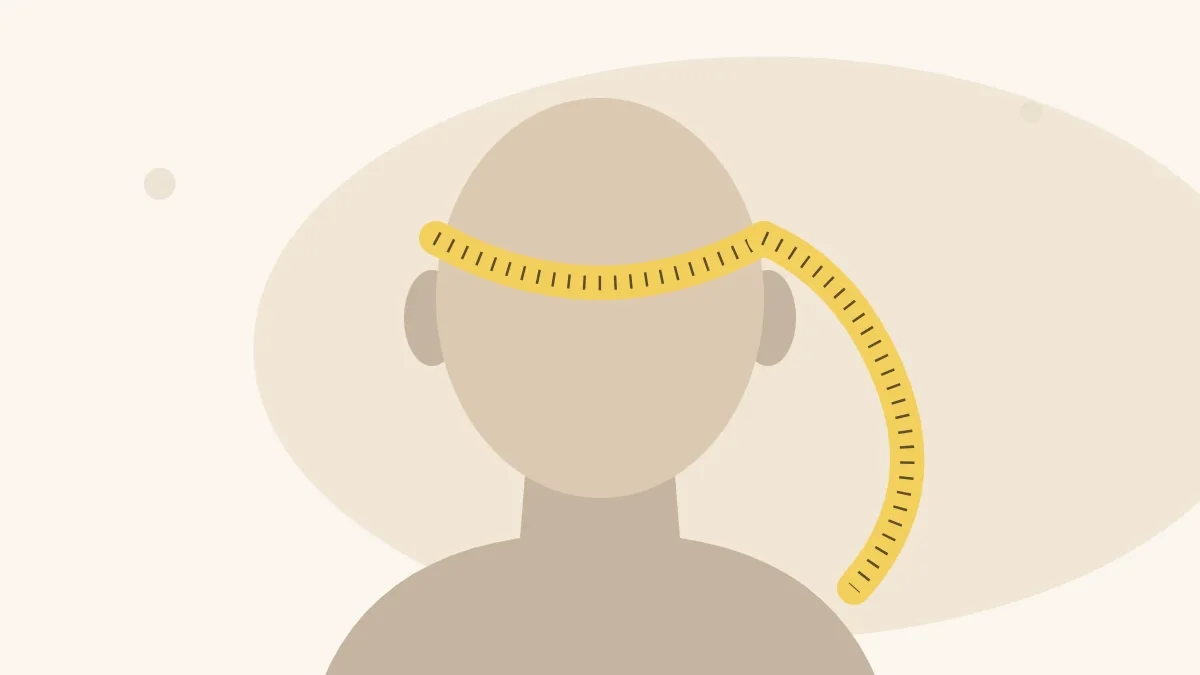
- Place the tape where the hat band will sit. That is across the middle of the forehead, just above the ears and around the widest part of the back of the head.
- Keep it level and snug, not tight. The tape should lie flat against the hair without pressing in.
- Read the number twice. Take the measurement again and use the larger reading if the two differ.
Thick or curly hair, braids and hairstyles worn under the hat all add to the measurement. Measure with the hair the way it will be worn.
Tip
Knitting a gift and cannot measure? Ask for the size of a hat the person already wears, or choose a deep ribbed cuff. Ribbing covers a wider range of head sizes than plain stockinette.
What negative ease means
Ease is the difference between the hat and the head. Knitted fabric stretches, so a hat is made smaller than the head it is meant for and stretches to fit. That gap is called negative ease, and it is what keeps a hat from sliding down over the eyes.
For most hats, plan for about 1.5 to 3 in (4 to 7.5 cm) of negative ease, which works out to roughly 5 to 15% smaller than the head. A worked example: for a 22 in (56 cm) head, 10% is 2.2 in, so the hat should measure close to 19.75 in (50 cm) around.
How much ease to choose depends on the fabric:
- Ribbed hats stretch the most and can take the full 3 in (7.5 cm) of negative ease, sometimes a little more.
- Stockinette and seed stitch hats sit well with about 2 in (5 cm).
- Colorwork hats stretch less because of the strands carried across the back; stay near 1.5 in (4 cm).
- Cotton and other inelastic yarns do not spring back the way wool does; stay toward the smaller end of the range.
Getting the height right
Height decides whether a hat covers the ears. A hat that is too short rides up; one that is too tall bunches at the crown or turns into an unplanned slouch.
The heights in the chart suit a fitted beanie that ends at the bottom of the earlobe. A useful check on a real head: run the tape over the top of the head from the bottom of one earlobe to the bottom of the other, then halve the number. The result is close to the height a fitted hat needs.
Then adjust for the style:
| Style | Change to the fitted height | Adult medium example |
|---|---|---|
| Fitted beanie, single brim | None | About 8.5 in (21.5 cm) |
| Beanie with a folded cuff | Add 2 to 3 in (5 to 7.5 cm) | About 10.5 to 11.5 in (26.5 to 29 cm) unfolded |
| Slouchy beanie | Add 2 to 3 in (5 to 7.5 cm) | About 10.5 to 11.5 in (26.5 to 29 cm) |
The classic knit beanie with a folded brim and the slouchy beanie pattern show both adjustments worked into full patterns.
Watch out
Measure height with the hat lying flat and unstretched. A hat stretched around a head becomes wider and slightly shorter, so one that seems just long enough on the table may come up short when worn.
From the chart to your needles
The chart gives a target in inches. Turning it into a stitch count takes one more number: gauge, the number of stitches in one inch of your own knitting.
- Knit and measure a gauge swatch for the hat in the yarn, needles and stitch pattern you plan to use.
- Multiply the target hat circumference by the stitches per inch.
- Round to a number that suits the ribbing repeat and the crown decreases.
For example, a target of 19.75 in at 4.5 stitches per inch gives 88.9 stitches, which rounds to 88. Checking back, 88 stitches divided by 4.5 is about 19.5 in (49.5 cm), just under the chart’s adult medium range and about 11% smaller than a 22 in head. The full method, with rounding rules for different stitch patterns, is in the guide to how many stitches to cast on for a hat.
If the finished hat does not fit
- Too loose around the band: the gauge was probably looser than planned. For the next hat, go down a needle size or cast on fewer stitches. A looser hat can sometimes be rescued by picking a brim with more grip; see the comparison of hat brim styles.
- Too tight: check the cast-on edge first. A tight cast-on makes a correctly sized hat feel small.
- Too short: unravel the crown, knit the body longer and work the crown again.
- Too tall: turn the brim up as a cuff, or unravel back to the body and start the crown sooner.
Frequently asked questions
How much smaller than the head should a knitted hat be?
Plan for about 1.5 to 3 in (4 to 7.5 cm) of negative ease, roughly 5 to 15% smaller than the head. Ribbed hats can take more; colorwork and cotton hats need less.
What size is a typical adult knitted hat?
For a head of 22 to 23 in (56 to 58.5 cm), a hat of about 19.75 to 20.75 in (50 to 53 cm) around and about 8.5 in (21.5 cm) tall is a common starting point. Measure the wearer whenever you can.
How tall should a hat be before the crown decreases?
It depends on how many rounds the crown takes. Subtract the height of the crown shaping, often 2 to 3 in (5 to 7.5 cm) on an adult hat, from the total hat height in the chart.
What if I cannot measure the person's head?
Use the typical range for their age group and choose a stretchy design such as a ribbed hat with a turned-up cuff, which adapts to a wider range of head sizes.