Hat Brim Styles: Ribbed, Folded, Rolled and Garter
Four brim styles cover nearly every hand-knitted hat. Here is how ribbed, folded, rolled and garter brims are made, how each one fits and when to choose it.
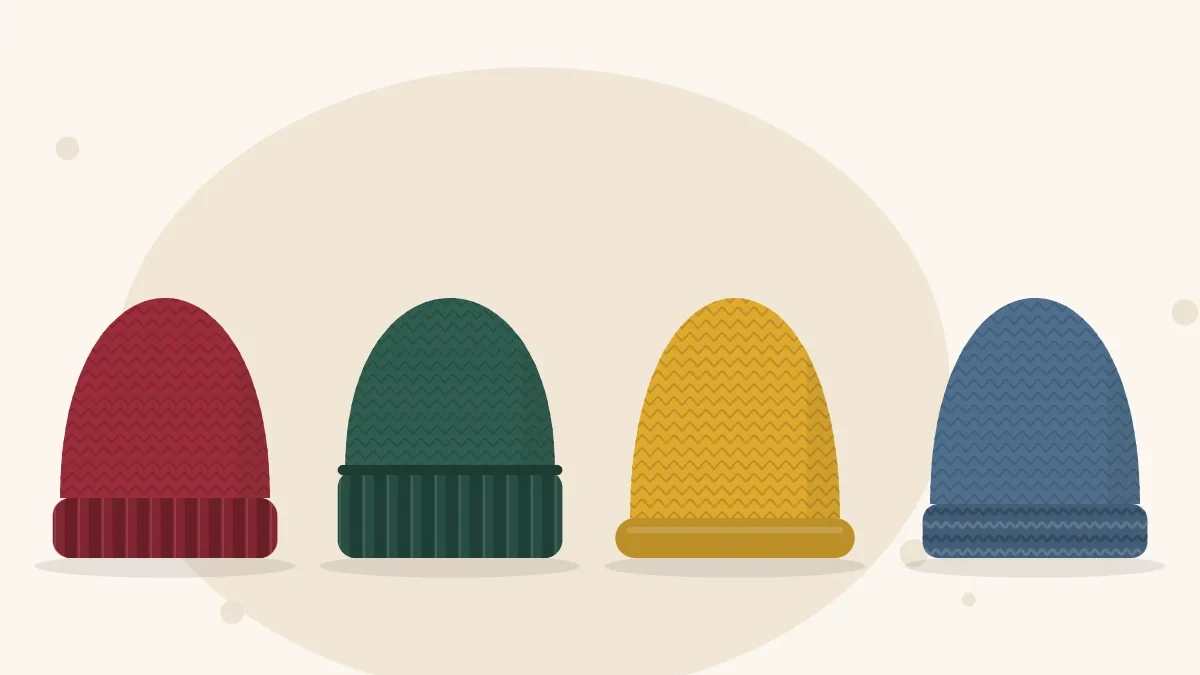
The brim is the first thing you knit on most hats and the part that does the most work: it grips the head, covers the ears and decides whether the hat looks sporty, classic or relaxed. Four brim styles cover nearly every hand-knitted hat: a single ribbed band, a folded cuff, a rolled stockinette edge and a garter band. Each one behaves differently, and choosing well is mostly a matter of knowing how much stretch and how much warmth you want.
The four brims at a glance
| Brim | How it is knit | Stretch and grip | Typical depth | Best for |
|---|---|---|---|---|
| Ribbed | Knit and purl columns, such as k1, p1 or k2, p2 | High; pulls in and springs back | 1 to 2 in (2.5 to 5 cm) | Almost any hat, especially a first one |
| Folded | A deep band, usually ribbing, turned up or joined double | High, with two layers of fabric | 2 to 3 in (5 to 7.5 cm) after folding | Cold-weather hats and watch caps |
| Rolled | Plain stockinette from the cast-on, left to curl | Low; it does not pull in | About 1 in (2.5 cm) of roll | Baby hats and soft, casual hats |
| Garter | Alternating knit and purl rounds (or knit every row when working flat) | Moderate stretch, little grip | 0.75 to 1.5 in (2 to 4 cm) | Simple hats and textured designs |
Ribbed brim: the dependable default
Ribbing stacks knit stitches above knit stitches and purl stitches above purl stitches. The columns draw together when the fabric relaxes and open up when it is stretched, which is exactly what a hat edge needs. A ribbed brim can be noticeably narrower than the head and still slide on comfortably.
The two common versions are k1, p1 (1×1 rib), which needs an even number of stitches, and k2, p2 (2×2 rib), which needs a multiple of 4. The full comparison of 1×1, 2×2 and twisted ribbing for brims goes into which one to pick for a given yarn.
Most patterns work the ribbing on a needle one or two sizes smaller than the body needle, for example US 6 (4 mm) under a US 8 (5 mm) body. The smaller needle makes a firmer band. Metric and US sizes do not always line up neatly, so the Craft Yarn Council needle size chart is a handy reference when choosing the smaller needle.
Tip
Cast on loosely, or cast on over the larger body needle and then switch to the smaller one for the first round. A tight cast-on is the usual reason a ribbed brim feels too small even when the stitch count is right.
Folded brim: twice the fabric over the ears
A folded brim puts two layers of knitting over the ears and forehead. There are two ways to build one, and they are worth telling apart.
The turned-up cuff
Knit the ribbing two to three times as deep as a normal brim, usually 4 to 6 in (10 to 15 cm), and simply turn it up when the hat is worn. Nothing is joined, so the wearer can fold the cuff deeper or unfold it for more coverage. The classic beanie with a folded brim uses this method.
Remember to add the extra length to the body. If the cuff will be turned up by 2.5 in (6.5 cm), the hat needs roughly that much more height than a hat with a single brim.
The joined double brim
Here the brim is knit to double depth, folded to the inside, and the cast-on edge is knit together with the live stitches so the fold is permanent. The result is a smooth, rounded edge with no visible cast-on line and a brim that cannot unfold. It takes one slow round to join, but there is no sewing afterward. The double-brim winter hat walks through that joining round one stitch at a time.
Rolled brim: no ribbing at all
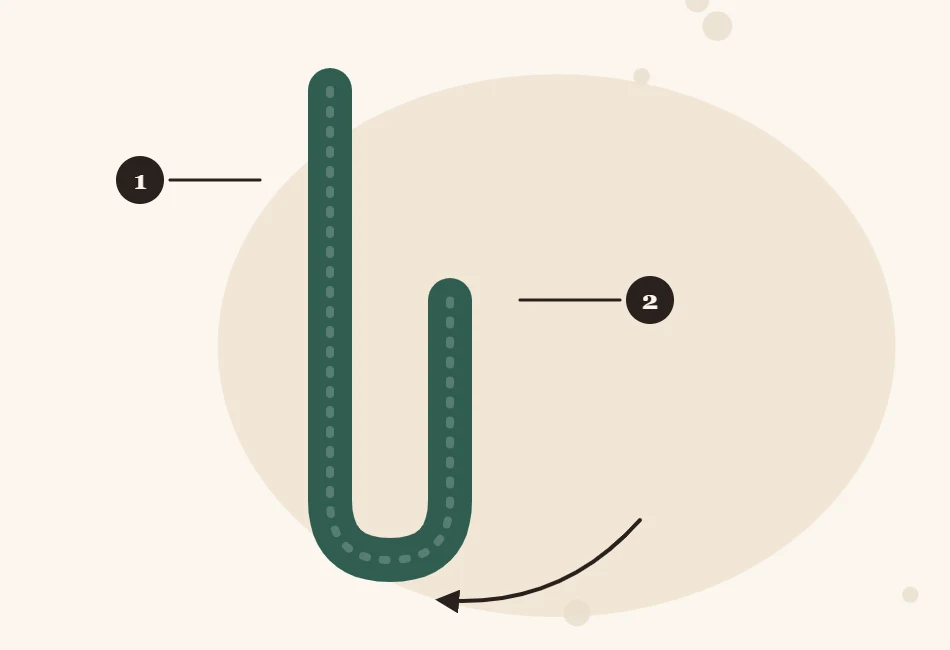
Stockinette fabric curls toward its knit side at the top and bottom edges. A rolled brim uses that habit on purpose: cast on, join and start knitting every round. After an inch or two the edge rolls up by itself into a soft tube.
Two things to plan for. First, the roll uses up length; allow about 1 in (2.5 cm) of extra knitting that will disappear into the curl. Second, stockinette does not pull in the way ribbing does, so a rolled-brim hat relies on its circumference alone to stay put. Size it with a little more negative ease than a ribbed hat, or expect a looser, more casual fit.
Watch out
A rolled edge cannot be blocked flat for long. If you want a flat, plain edge, a rolled brim is the wrong choice; use garter or ribbing instead.
Garter brim: flat, simple and textured
Garter stitch lies flat and does not curl, so a few ridges of it make a neat edge. In the round, garter is made by alternating one knit round and one purl round; two rounds make one ridge. Worked flat, it is simply knitting every row, which is why the garter stitch hat is such a friendly first project.
Garter stretches easily but does not snap back with the force of ribbing. It also tends to be slightly wider than stockinette on the same number of stitches. For both reasons, work a garter brim on a needle one or two sizes smaller than the body, and keep it shallow: four to six ridges is usually plenty.
How to choose a brim
- If the hat must stay on in wind or during sport, choose ribbing, single or folded.
- If warmth over the ears matters most, choose a folded brim, joined or turned up.
- If the wearer dislikes anything snug on the forehead, choose a rolled or garter brim.
- If the yarn has little elasticity, such as cotton, choose ribbing on a smaller needle so the stitch pattern supplies the grip the fiber lacks.
- If you are unsure of the head size, choose a turned-up cuff; it adjusts in both depth and fit.
Swapping one brim for another
Most hat patterns allow a different brim as long as three things are checked.
- Stitch count. The cast-on must suit the new repeat: any number for rolled or garter, an even number for 1×1 rib, a multiple of 4 for 2×2 rib.
- Height. Measure the hat from the edge it will be worn on. A rolled brim needs extra length for the curl, and a folded brim needs the depth of the fold added.
- Yarn. A deeper or doubled brim uses more yarn. A double brim can add roughly a fifth to the yardage of a plain hat, so buy a little extra.
The brim does not have to match the body. The overview of the best stitches for knitted hats explains how each fabric stretches, which helps when mixing them.
Frequently asked questions
Which hat brim is easiest for a beginner?
A single ribbed brim in k1, p1 or k2, p2 is the usual first choice because it is forgiving on fit. A rolled brim is even simpler to knit, since it is plain stockinette, but it gives a looser fit.
How deep should a ribbed hat brim be?
About 1 to 2 in (2.5 to 5 cm) for a single brim on an adult hat. For a cuff that turns up, knit 4 to 6 in (10 to 15 cm) so that it folds to 2 to 3 in (5 to 7.5 cm).
Why does my stockinette brim keep curling?
Stockinette fabric naturally rolls toward its knit side at the top and bottom edges. Blocking reduces the curl only briefly. To get a flat edge, begin the hat with ribbing or a few ridges of garter stitch instead.
Does a double brim need more yarn?
Yes. The brim is knit to twice its finished depth, so the hat can need roughly a fifth more yarn than the same hat with a single brim. Treat that as an estimate and buy a little extra.