Needles for Knitting Hats: 16-Inch Circulars, DPNs and Magic Loop
Which needles a hat needs and why: a 16-inch circular for the body, double-pointed needles or magic loop for the crown, and how to choose the size.
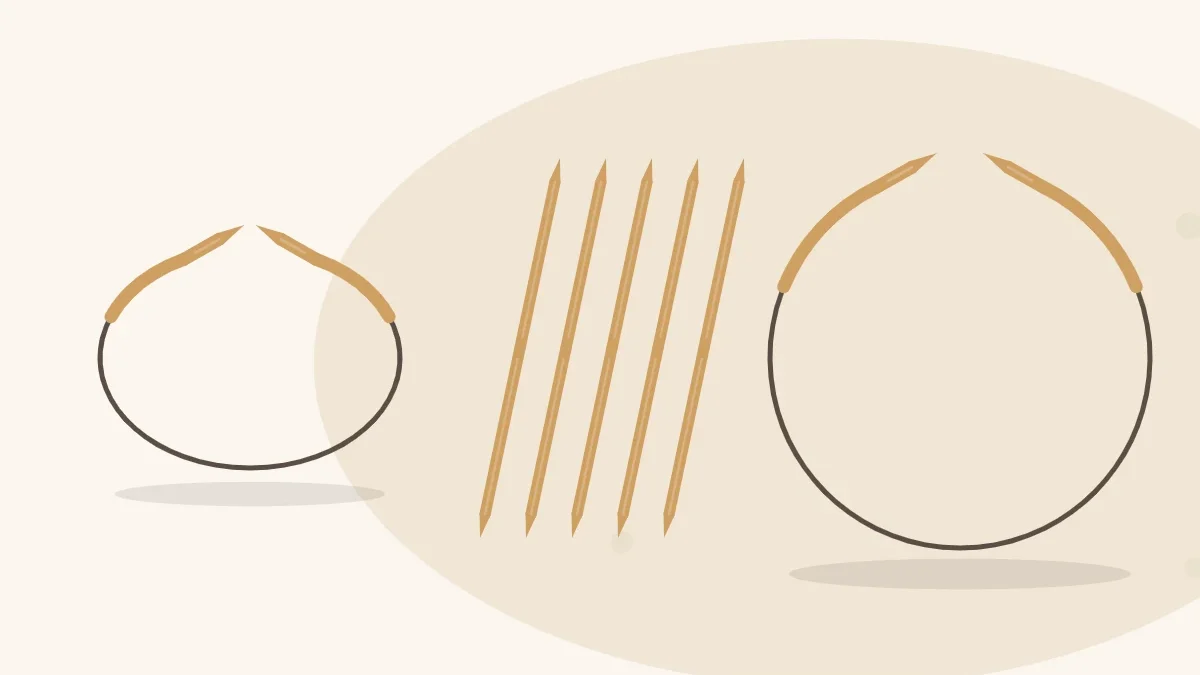
Most hats need two kinds of needle: something to carry the full circle of stitches for the brim and body, and something for the crown, where the circle shrinks to a few inches. The usual answer is a 16-inch circular needle plus a set of double-pointed needles (DPNs), or one long circular used for magic loop from start to finish. Here is how each option works, what it is good at, and how to pick the size.
The Three Main Options at a Glance
| Needle | Best for | Strengths | Drawbacks |
|---|---|---|---|
| 16-inch (40 cm) circular | Brim and body of child and adult hats | Simple and fast; stitches just go around | Cannot finish the crown; too long for baby hats |
| Double-pointed needles (DPNs) | Crowns and very small hats | Work at any small circumference | Several needles to manage; stitches can slide off the ends |
| Long circular, 32 to 40 in (80 to 100 cm), for magic loop | A whole hat on one needle, any size | One needle does everything; nothing to swap | Stopping to slide the cable twice per round |
The 16-Inch Circular Needle
A circular needle is two short tips joined by a flexible cable. The stated length is measured from tip to tip. On a 16-inch needle the stitches need to reach all the way around without being stretched, so it suits hats with a finished circumference of roughly 17 in (43 cm) and up. That covers child and adult sizes: 88 stitches of worsted weight yarn make a 19.5 in (49.5 cm) hat and slide around comfortably.
Smaller hats are another matter. A baby hat of about 14 in (35.5 cm) will not span a 16-inch needle, so it needs DPNs or magic loop from the cast-on.
The tips on a 16-inch circular are shorter than on longer needles, which can feel cramped at first. Hands adjust after a few rounds. If you have never used one, your first hat on circular needles starts from the cast-on, and the guide to joining in the round covers the one step that needs care.
Double-Pointed Needles
DPNs are short, straight needles with a point at each end, sold in sets of four or five. The stitches are divided over three or four needles arranged in a triangle or square, and the spare needle does the knitting. When it has emptied a needle, that needle becomes the new spare.
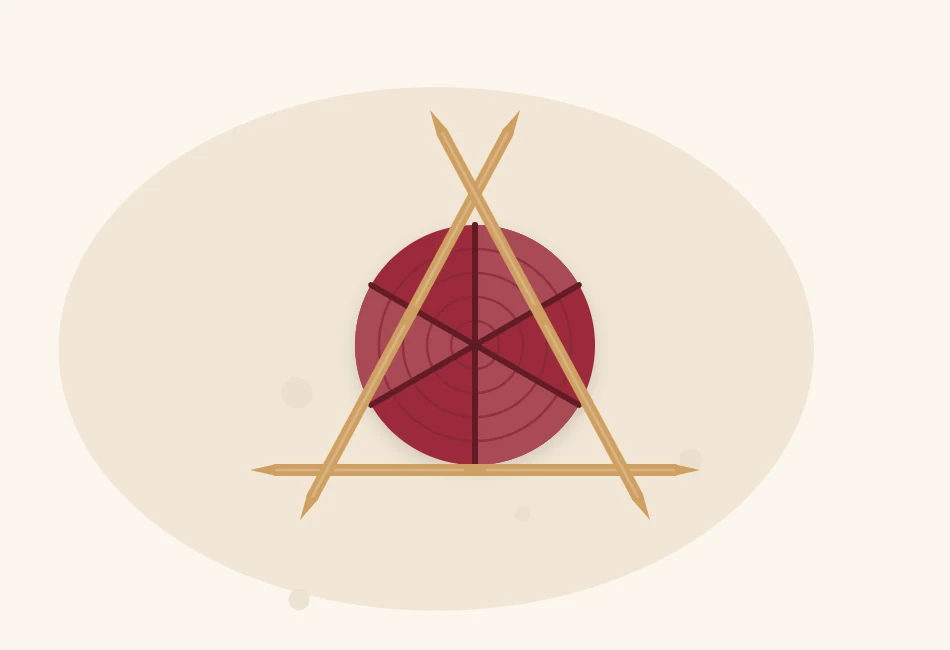
To move a crown from the circular needle to DPNs, simply knit the next round onto them: about a third of the stitches onto each of three needles. Try to split the stitches at the boundaries between decrease sections, so that no k2tog straddles two needles.
For hats, DPNs of 6 to 8 in (15 to 20 cm) are a practical length. Shorter ones are nimble with fine yarn; thick yarn needs the longer ones so the stitches do not fall off.
Tip
A loose column of stitches can form where two DPNs meet. Pull the yarn snug on the second stitch of each needle, not the first, and the gap closes.
Magic Loop on a Long Circular
Magic loop uses one long circular needle with a soft, flexible cable. The stitches are split into two halves, and the extra cable is pulled out between them in a loop on each side. You knit the front half with the two tips, turn the work, slide the cable so the other half sits on a tip, and knit that half.
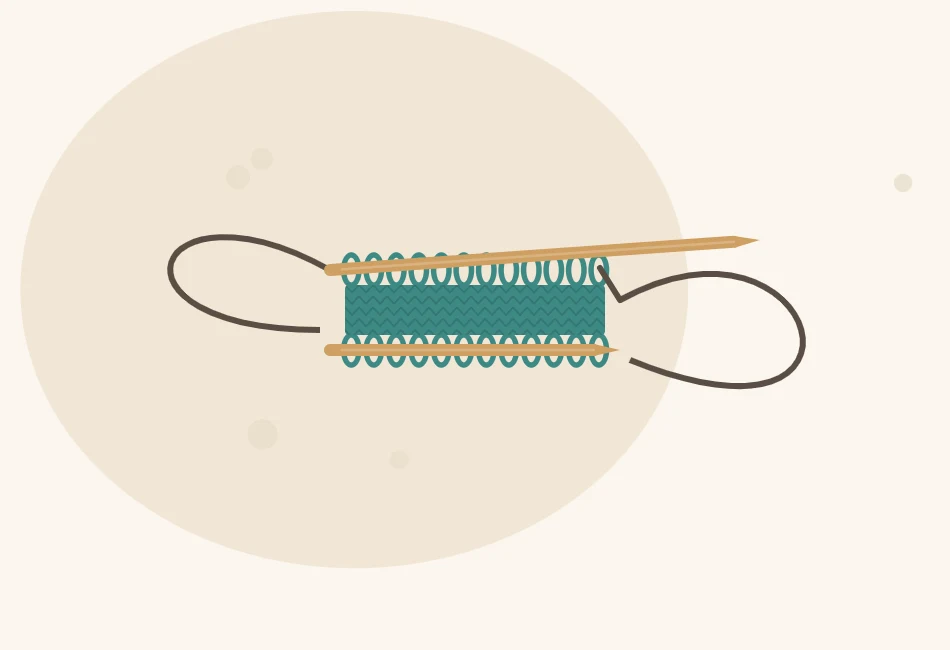
Because the loops absorb the extra length, the same needle works for 88 stitches or for the final 8. A knitter who owns one 32-inch circular in the right size can make a complete hat with nothing else. A stiff cable fights back, so choose one that bends easily.
Which crown method should a beginner choose?
Either works, and neither is more “correct”. DPNs are easier to understand at a glance and cost little to try. Magic loop has fewer points to poke out and fewer needles to drop. If the crown is the part you are nervous about, read through how crown decreases work first; the knitting itself is the same on both.
What About Straight Needles?
Straight needles cannot knit a tube, but they can knit a hat. The piece is worked flat and sewn up the back, as in the easy flat-knit hat on straight needles. A flat hat needs no DPNs at all, because the crown rows simply get shorter.
Choosing the Needle Size
Needle size means the thickness of the needle, and it is matched to the yarn weight. The pairs below are common starting points for hats. The middle column is for the hat body; the brim is usually worked on a needle about 0.5 to 1 mm thinner so the ribbing grips.
| Yarn weight | Body needle | Brim needle | Typical gauge over 4 in (10 cm) |
|---|---|---|---|
| DK (3) | US 6 (4 mm) | US 4 (3.5 mm) | 22 stitches |
| Worsted (4) | US 8 (5 mm) | US 6 (4 mm) | 18 stitches |
| Bulky (5) | US 10.5 (6.5 mm) | US 9 (5.5 mm) | 14 stitches |
| Super bulky (6) | US 13 (9 mm) | US 11 (8 mm) | 10 stitches |
US numbers and metric sizes do not line up neatly, so check both on the package; the Craft Yarn Council needle size chart lists the equivalents. Yarn weights and their numbers are set out in the council’s standard yarn weight system.
Watch out
The table is a starting point, not a guarantee. Knitters vary in tension, and the size printed on the needle matters less than the fabric it makes in your hands. Knit a gauge swatch and go up or down a size if the stitch count is off.
Needle Materials
- Bamboo and wood have a slightly grippy surface. Stitches stay where they are put, which helps on DPNs and with slippery yarn. They are a comfortable first choice.
- Metal is smooth and fast, with sharper points. Stitches slide easily, sometimes too easily for a beginner holding four DPNs.
- Plastic and resin are light, which is pleasant in the large sizes used for super bulky yarn.
Your crown needles and your body needle must be the same thickness. They do not have to be the same material, although a switch from grippy to slick can change your tension a little.
A Sensible Starter Set
For a first adult hat in worsted weight yarn, this short list covers everything:
- One 16-inch circular needle, US 8 (5 mm), for the body
- One 16-inch circular needle, US 6 (4 mm), for the brim
- One set of US 8 (5 mm) double-pointed needles, or one 32-inch US 8 (5 mm) circular for magic loop
- A stitch marker and a tapestry needle
Knitters who would rather buy less can work the brim on the body needle. The brim will be slightly looser, but the hat will still fit.
Frequently asked questions
What length circular needle do I need for a hat?
A 16-inch (40 cm) circular suits hats of roughly 17 in (43 cm) around and larger, which covers most child and adult sizes. For baby hats, or to knit the whole hat on one needle, use a 32 to 40 in (80 to 100 cm) circular with the magic loop method.
Can I knit a hat without double-pointed needles?
Yes. Magic loop on a long circular needle handles the crown instead, and a hat knitted flat on straight needles and seamed needs neither.
What size needles should I use for a worsted weight hat?
US 8 (5 mm) for the body and US 6 (4 mm) for the brim are common starting points for worsted weight (4) yarn. Knit a gauge swatch and change needle size if your stitch count does not match the pattern.
Are bamboo or metal needles better for hats?
Neither is better overall. Bamboo and wood grip the stitches slightly, which many beginners find reassuring, especially on double-pointed needles. Metal is smoother and faster.